
Every 40 seconds, someone in the United States suffers a stroke.
It can take less than four minutes to die from a stroke, which is why recognizing stroke symptoms early can be lifesaving.
May is National Stroke Awareness Month, which makes it a great time to raise awareness about stroke prevention, understand the signs of stroke and learn more risk factors for stroke.
What is the Difference Between a Stroke and a TIA?
A stroke is a sudden loss of brain function and injury to part of the brain resulting from a problem with the blood vessels supplying the brain. There are two main types of stroke, those associated with rupture of the blood vessels (hemorrhagic strokes) and those associated with the blockage of blood vessels (ischemic strokes).
Roughly 87% of all strokes are ischemic, where blood flow to the brain is blocked.
A transient ischemic attack (TIA) is a short period of symptoms similar to those of a stroke when the blood vessel reopens on its own. Blood is able to flow through the vessel again, even if it’s much less. The symptoms may disappear altogether, which may lead the patient to believe that the problem is gone. However, the underlying cause still needs to be corrected to prevent this from happening again, which is why a TIA is often referred to as a warning stroke, and is a medical emergency.
Stroke Risk Factors
There are many modifiable risk factors that can lead to a stroke or TIA – meaning you can make health or lifestyle changes to reduce your risk of stroke.
Some of the modifiable risk factors and the suggested modifications are:
- High blood pressure – Eat more fruits and vegetables, maintain a healthy weight, take medications (if applicable), monitor your blood pressure regularly and eat a low-fat, low-salt diet.
- Sedentary life style – Engage in regular physical activity. Adults aged 18 to 65 years should participate in physical activity (walk, bike) for a minimum of 30 minutes, five days a week.
- High cholesterol – Try to reduce the amount of full fat dairy, red meats, foods high in trans fats (margarine/ butter, oils), fast foods and pre-packaged processed foods you eat. Instead, opt for fish, foods rich in Omega-3 fatty acids, whey protein and fiber-rich foods.
- Diabetes – Check your cholesterol regularly and keep your weight in check. Even at a healthy weight, belly fat increases the risk for heart disease. Aim to keep your waist measurement under 40 for men and 35 for women.
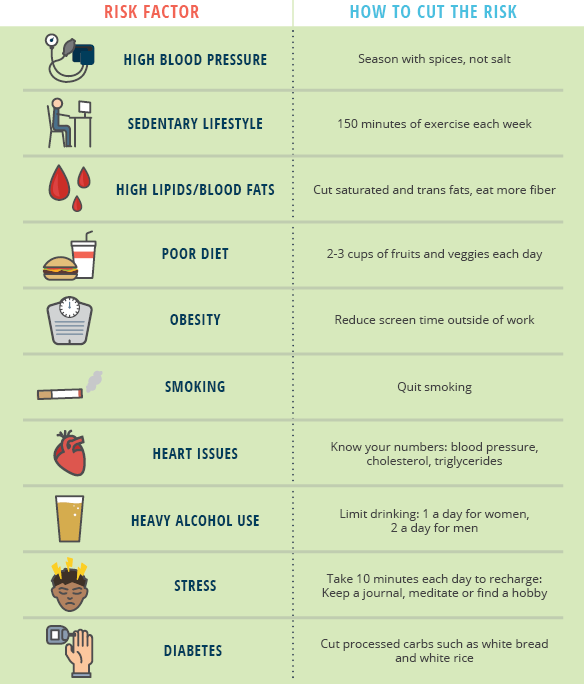
Strokes can be prevented. A diet rich in fruits and vegetables, plenty of water and lots of protein can all help keep your brain healthy.
Identifying Signs of Stroke
Stroke symptoms can come on suddenly, but the best outcomes occur when a patient is seen within two hours of the start of symptoms.
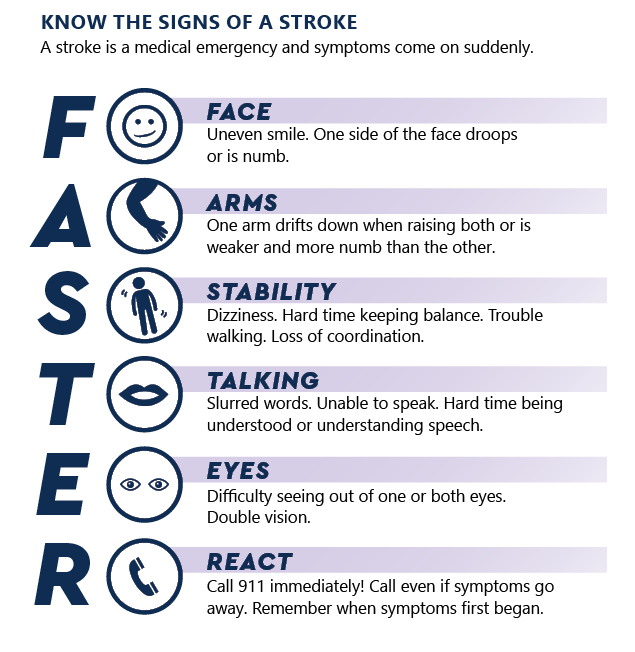
Recognize the signs of stroke using the FASTER method:
- Face – The person suddenly has an uneven smile where one side of the face droops, or is numb.
- Arms – One arm drifts down when trying to raise both arms, or the arm is weaker and more numb than the other.
- Stability – Experiencing dizziness, having a hard time keeping balance, trouble walking or loss of coordination can all be important indicators.
- Talking – Slurred words, suddenly unable to speak or have a hard time being understood or understanding speech.
- Eyes – Difficulty seeing out of one or both eyes, or experiencing double vision.
- React – If any of these symptoms are present, call 911 immediately and try to remember what time the symptoms first began. And, even if the symptoms go away, you should still be evaluated by a healthcare professional.
Recovery After Stroke
If you or someone you know is a stroke survivor, Mohawk Valley Health System (MVHS) has a network of survivors and caregivers that meet regularly. You will be able to listen or share with people who have had similar experiences. These people are each at different stages in the process of redefining life with these new challenges.
For more information on dates, times, and locations of meetings, please contact the Stroke Program at 315-917-8248 or visit mvhealthsystem.org/stroke.