
Lung cancer is still one of the most common and serious cancers that affects both men and women. But with advances in screening and treatment if caught early, survival rates increase dramatically.
Part of this fight includes working with a team of specialists in thoracic surgery, which encompasses most of the issues that occur in the chest other than the heart – lungs, esophagus and diaphragm.
If you or a loved one has a history of smoking and is a candidate for regular lung cancer screenings, it’s important to speak to your primary healthcare provider about your concerns, and to see if you might be eligible.

Who is a Candidate for Low-Dose CT Lung Cancer Screening?
A low-dose computed tomography (LDCT) scan is a quick, non-invasive imaging test that can detect lung cancer in its earliest, most treatable stages. You are typically a candidate for an annual LDCT screening if you meet specific, high-risk criteria, as outlined by professional medical guidelines.
Generally, candidates are:
- Between 50 and 80 years old.
- Are a current or former smoker with a 20 pack-year smoking history (this means smoking one pack a day for 20 years, two packs a day for 10 years, etc.)
It’s important to also remember that you could be asymptomatic, meaning you show no signs or symptoms of lung cancer.
What Can I Expect During a LDCT Lung Cancer Screening?
Before you are scheduled for a LDCT scan, you will often times meet with your care team first to talk about your medical history – including your history of smoking – and to discuss the pros and cons of the screening.
If you are a candidate for the screening, the experience is quick and straightforward for the patient:
- No special preparation is needed
- There is no IV contrast administered
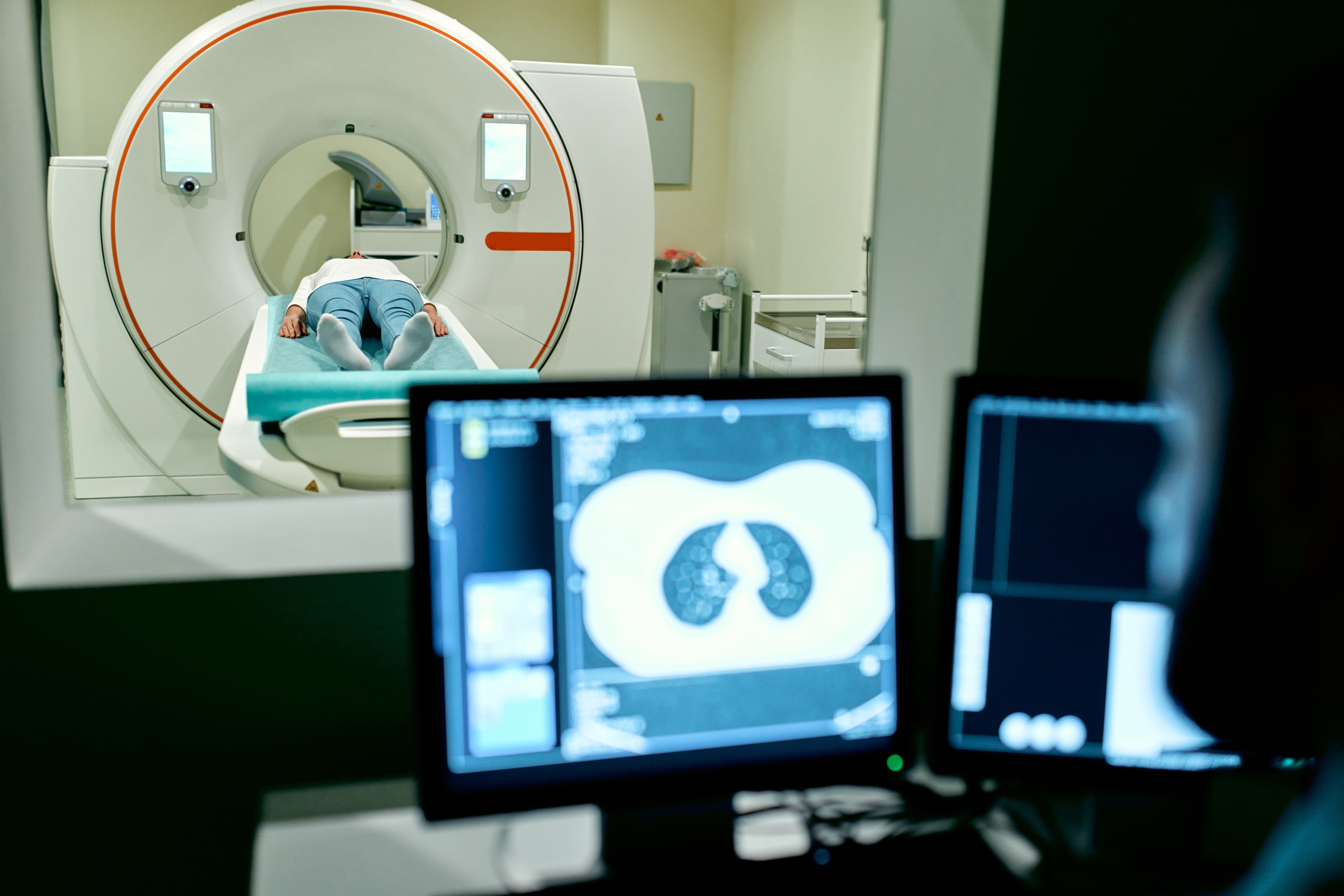
- During the scan, you will lie on a table that slides into a large, circular CT machine, which then uses a low dose of radiation to take detailed images of your lungs
- The entire scan takes only a few minutes where you may be asked to hold your breath for a few seconds to ensure clear images.
Once the scan is complete, your healthcare provider will review your results and determine any next steps, if needed.
What if Something is Found During the LDCT Screening?
Finding an abnormal result on a screening scan, often a small spot or nodule, can be worrying, but it is important to remember that nodules an abnormal result does not necessarily mean cancer. A non-cancerous, or benign, nodule can be a common result.
If an abnormality is detected, your healthcare team will likely recommend one of the following next steps:
- For very small, low-risk nodules, the doctor may recommend another LDCT scan in a few months to see if the nodule changes or grows
- For larger or suspicious nodules, further testing may be needed. This could include a PET scan, a biopsy (taking a tissue sample) or a specialized procedure called a bronchoscopy to determine if the spot is cancerous
Early Detection and Surgical Treatments
If lung cancer is detected at an early stage, when it is small and localized, the prognosis is significantly better. This is where the specialty of a Thoracic surgeon plays a vital role, as the goal is often to remove the cancerous tissue entirely.
Common Surgical Treatments for Early-Stage Lung Cancer:
- Wedge Resection or Segmentectomy: These are smaller operations that remove only the tumor and a surrounding margin of tissue, or a larger portion called a segment. These are used when conserving lung tissue is possible.
- Lobectomy: This is the most common surgery for early-stage lung cancer and involves removing an entire lobe of the lung (the right lung has three lobes, and the left has two).
- Minimally Invasive Techniques: Many of these procedures are now performed using advanced techniques like Video-Assisted Thoracoscopic Surgery (VATS) or Robotic-Assisted Thoracic Surgery. These approaches use small incisions, leading to less pain, shorter hospital stays and faster recovery times than traditional open surgery (thoracotomy).
The Benefits of Catching Cancer at an Early Stage:
- Higher Survival Rate: Early-stage cancer is often localized, meaning it has not spread. Complete surgical removal offers the best chance for survival.
- Less Aggressive Treatment: Detecting cancer early often allows for surgery alone, potentially avoiding or limiting the need for intensive treatments like chemotherapy or radiation.
- Preservation of Lung Function: Minimally invasive techniques and smaller resections (like a segmentectomy) help preserve as much healthy lung tissue as possible, maintaining a better quality of life post-treatment.

Preventative Steps for Those Who Don’t Qualify for Screening
If you don’t meet the current high-risk criteria for screening, you can still take effective steps to drastically reduce your lung cancer risk.
The biggest? Quit smoking – or never start – this is the single most important action you can take. Your risk begins to drop almost immediately after quitting and continues to decline over time.
Here are some other tips to help reduce your exposure:
- Avoid Secondhand Smoke: Exposure to secondhand smoke significantly increases risk; maintain smoke-free environments at home and work.
- Test Your Home for Radon: Radon is a naturally occurring radioactive gas that can accumulate in homes and is the second leading cause of lung cancer. Home testing kits are readily available.
- Limit Exposure to Occupational Carcinogens: If you work with substances like asbestos, arsenic, or diesel exhaust, use all recommended protective equipment and follow safety protocols.
- Maintain a Healthy Lifestyle: A diet rich in fruits and vegetables and regular physical activity supports overall lung health.
If you or anyone you know may qualify for a lung cancer screening, please reach out to the MVHS Lung Cancer Screening Program at 315-801-8588.